In Welke Plaats Is Het Knmi Gevestigd: 170 Years of Weather Wisdom
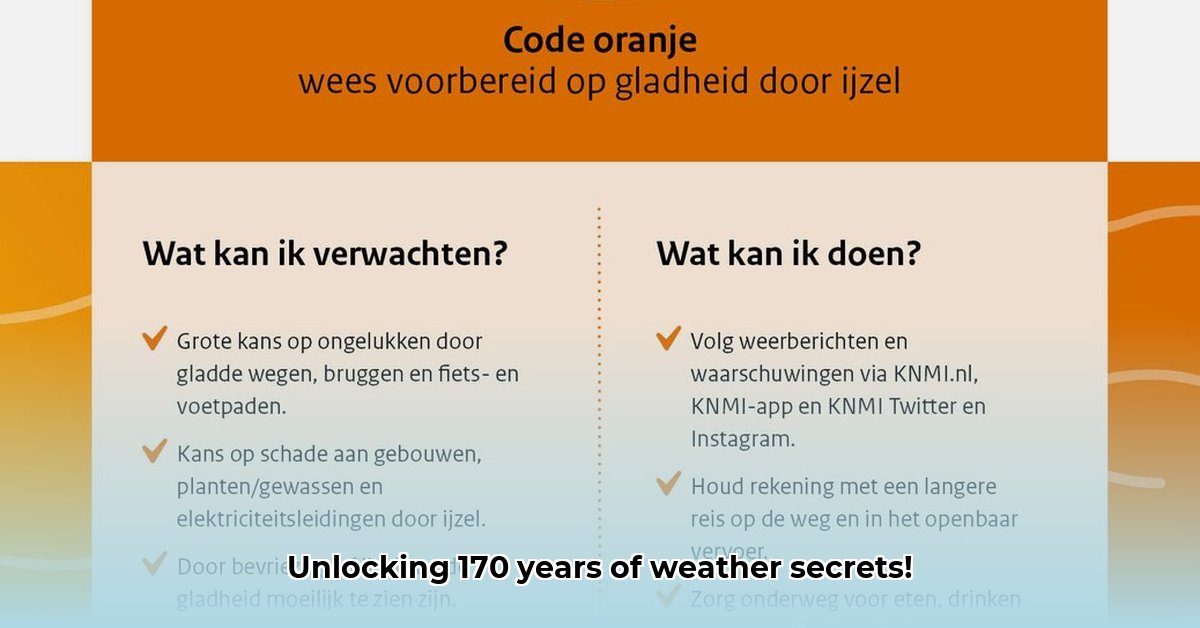
Eish, you want to know where the KNMI's at? For over 170 years, the Royal Netherlands Meteorological Institute (KNMI) – ja, that's the outfit – has been keeping tabs on the weather, predicting our next downpour, and helping us understand our changing climate. This isn't just about a building; it’s a story about how a small team went from basic tools to supercomputers, and how their work impacts us locally and globally, especially as our planet's weather gets increasingly unpredictable. We'll find the KNMI's location, explore its evolution, and delve into the impact of its forecasts.
A Century and a Half of Weather Watching
Established in 1854, the KNMI has seen it all – storms, sunshine, and shifting climates. Initially, it was all about basic observations: measuring temperatures, noting wind direction, and keeping an eye on the skies. Think pen and paper, not powerful satellites!
From Pen and Paper to Supercomputers: A Technological Leap
Imagine the dedication of those early forecasters! No fancy satellites, no powerful computers – just keen observation and perseverance. Tracking weather patterns was a painstaking process. Today, the KNMI utilizes supercomputers (incredibly powerful machines) to process vast amounts of data, resulting in remarkably accurate forecasts. This technological leap highlights our progress in understanding and predicting the weather. But how has this impacted forecasting accuracy? Have you ever been caught off guard by an inaccurate weather forecast?
More Than Just Rain and Shine
While predicting the weather is the KNMI's core function, its role has expanded significantly. It's involved in crucial climate research, monitors earthquake activity, and provides essential data for various industries. It's not just about whether to grab an umbrella; it’s about understanding our planet’s complexities and preparing for the future.
De Bilt: Home of the Weather Wizards
The KNMI's headquarters are located in De Bilt, a charming town near Utrecht. This strategic location facilitates easy access to weather data from across the Netherlands. But why De Bilt? Was it purely strategic, or were there other factors involved in selecting this location?
Challenges and Triumphs: The Ever-Evolving KNMI
The KNMI faces challenges, including creating accurate climate change models, improving forecast precision in our warming world, and securing adequate funding. However, these obstacles also present opportunities for innovation, collaborations, and technological breakthroughs.
The KNMI's Far-Reaching Impact
The KNMI's work directly affects every person in the Netherlands. Timely storm warnings prevent damage; agricultural advice boosts crop yields; and climate data guides government policies. The KNMI's influence extends internationally through its contributions to global climate research and collaborations with other weather organisations.
A Glimpse into KNMI History
Here are some key moments in the KNMI's history:
| Year | Significant Event | Its Importance |
|---|---|---|
| 1854 | KNMI's official founding | Marked the beginning of systematic weather observation in the Netherlands. |
| 1900s-1950s | Early forecasting methods developed. | Improvements in forecast accuracy and reach began to emerge. |
| 1980s-Present | Focus on climate change research intensified. | Addressing the crucial global climate challenge. |
| 2012 | Supercomputers implemented. | Significantly enhanced forecasting capabilities. |
From humble beginnings to a high-tech institution, the KNMI's journey reflects its commitment to understanding and predicting weather patterns. Remember this the next time you check the forecast! Now you know: In Welke Plaats Is Het Knmi Gevestigd – De Bilt!
How does KNMI's forecasting accuracy compare to global meteorological agencies?
Established in 1854 and based in De Bilt, the KNMI has a rich history. But how does its forecasting compare to other global meteorological agencies? Direct comparisons are challenging due to variations in models, datasets, and evaluation metrics used by different agencies.
KNMI's Multi-Model Approach: A Symphony of Predictions
KNMI employs a sophisticated multi-model approach. It uses a blend of global and high-resolution regional models; think of it as using both a wide-angle and a zoom lens for a sharper weather picture. Harmonie-Arome provides detailed short-term forecasts. The IFS/OpenIFS system is used for longer-range predictions, while EC-Earth, RACMO, and HCLIM are employed for climate simulations and hyper-local forecasting. This approach aims for greater accuracy and mitigates the uncertainties inherent in any single model.
But how does this translate to actual accuracy? Direct comparisons are difficult, as mentioned earlier. While the KNMI continuously strives for improvement, readily available public data doesn't allow for straightforward comparisons with other agencies.
KNMI's Evolution: From Humble Beginnings to Cutting-Edge Technology
The KNMI’s journey, from basic barometers to sophisticated satellite imagery, reflects the advancements in meteorology. This technological leap has significantly improved forecasting accuracy over the years. However, challenges remain, particularly in predicting high-impact weather events.
The Future of Forecasting at KNMI
KNMI focuses on improving model calibration and developing advanced ensemble forecasting methods. The integration of artificial intelligence (AI) and machine learning (ML) shows promise in enhancing model accuracy. However, data assimilation and managing model uncertainties remain key research areas. Collaboration with international partners is crucial for data sharing and model validation.
Key Takeaways:
- KNMI utilizes a multi-model approach for comprehensive weather forecasting and climate projections.
- Direct comparison of accuracy with other global agencies is difficult due to methodological variations and data limitations.
- Ongoing model improvement, technology upgrades, and international collaborations enhance forecasting capabilities.
- Challenges remain in predicting high-impact weather events and managing model uncertainties.
- The future involves advancements in AI/ML integration and improved data assimilation techniques.